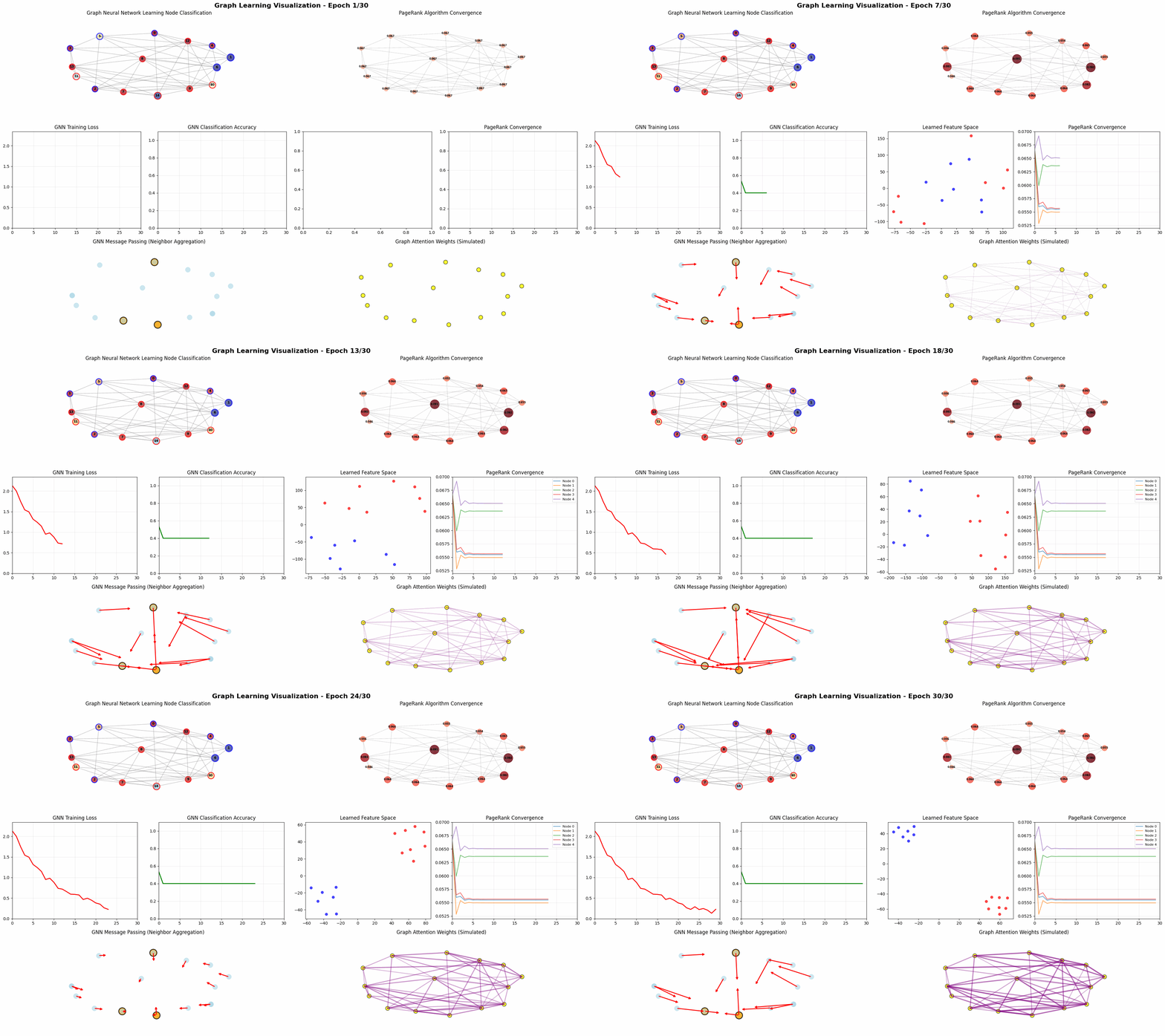
What's really fascinating about this graph visualization is that you're watching two completely different types of "intelligence" work on the same network structure simultaneously. The Graph Neural Network is like a student gradually learning to recognize patterns - it starts by making random guesses about which nodes belong to which community, but through message passing (where each node literally talks to its neighbors and updates its understanding), it slowly figures out the underlying social structure. You can see this happening as the node colors shift from chaotic to organized, and the feature space plot shows how the algorithm is internally organizing nodes into distinct clusters. Meanwhile, PageRank is running its own iterative process, but it's not learning per se - it's more like water finding its level, with importance scores flowing from node to node until they reach equilibrium. The really cool part is watching how these two approaches reveal different aspects of the same graph: the GNN discovers communities (who hangs out together), while PageRank finds influence (who's most connected or central). By the end, you can see that sometimes the most "important" nodes according to PageRank aren't necessarily the most representative of their communities according to the GNN, which tells you something profound about how network position and community membership are related but distinct concepts in graph analysis.