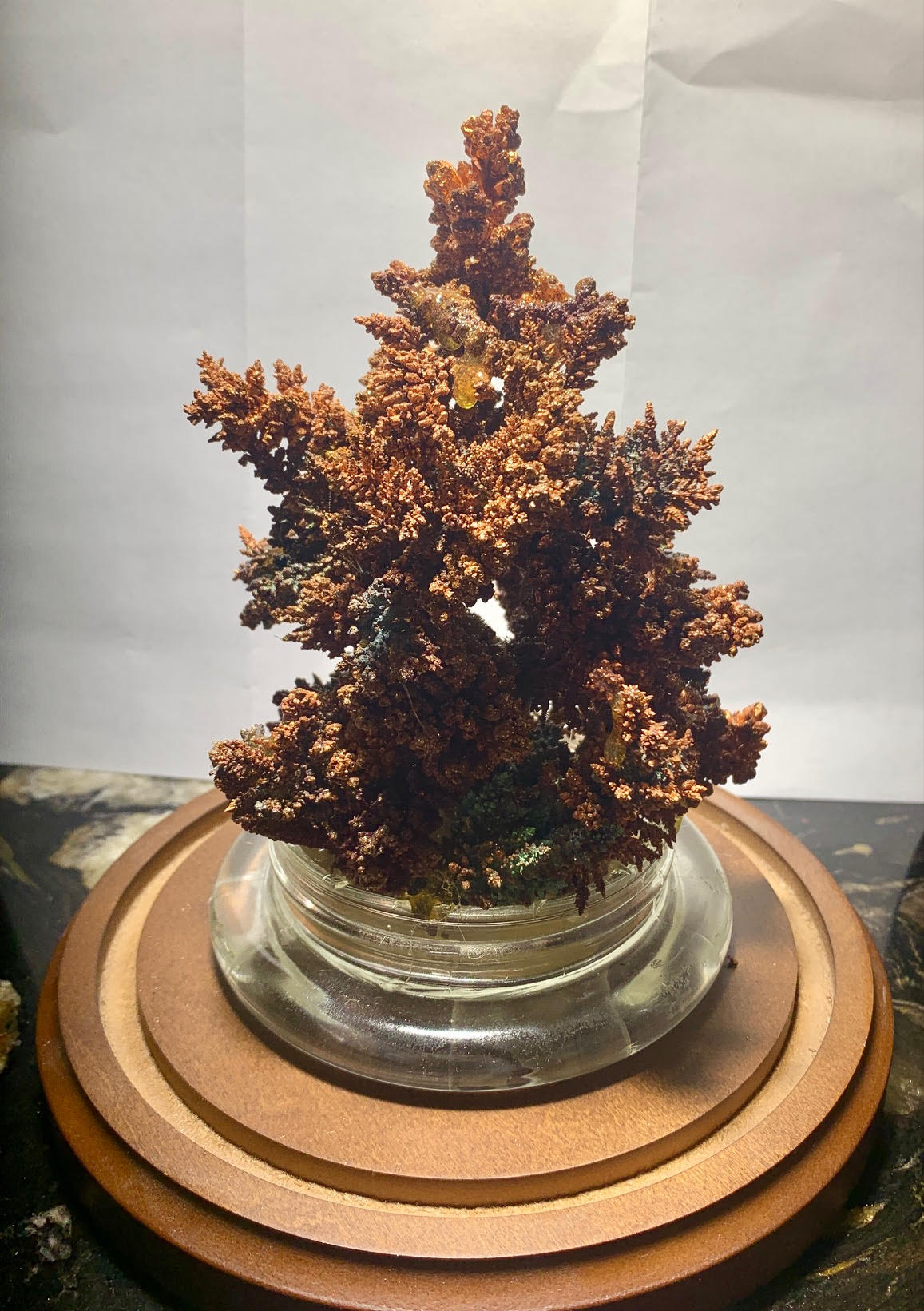
I have always been fascinated with electrochemistry since my dad did the iron nail in the copper sulfate trick. Most of the time I was in college I had a small growing experiment running where I would take scrap copper and use it with a small transformer and some copper sulfate to grow copper "trees". I gave many of the trees away, one of them is in the Seeman Mineral Museum in Houghton, Michigan.
The one here is the result of nearly a year of slow growing in a salad bowl which I fed with old plumbing parts.
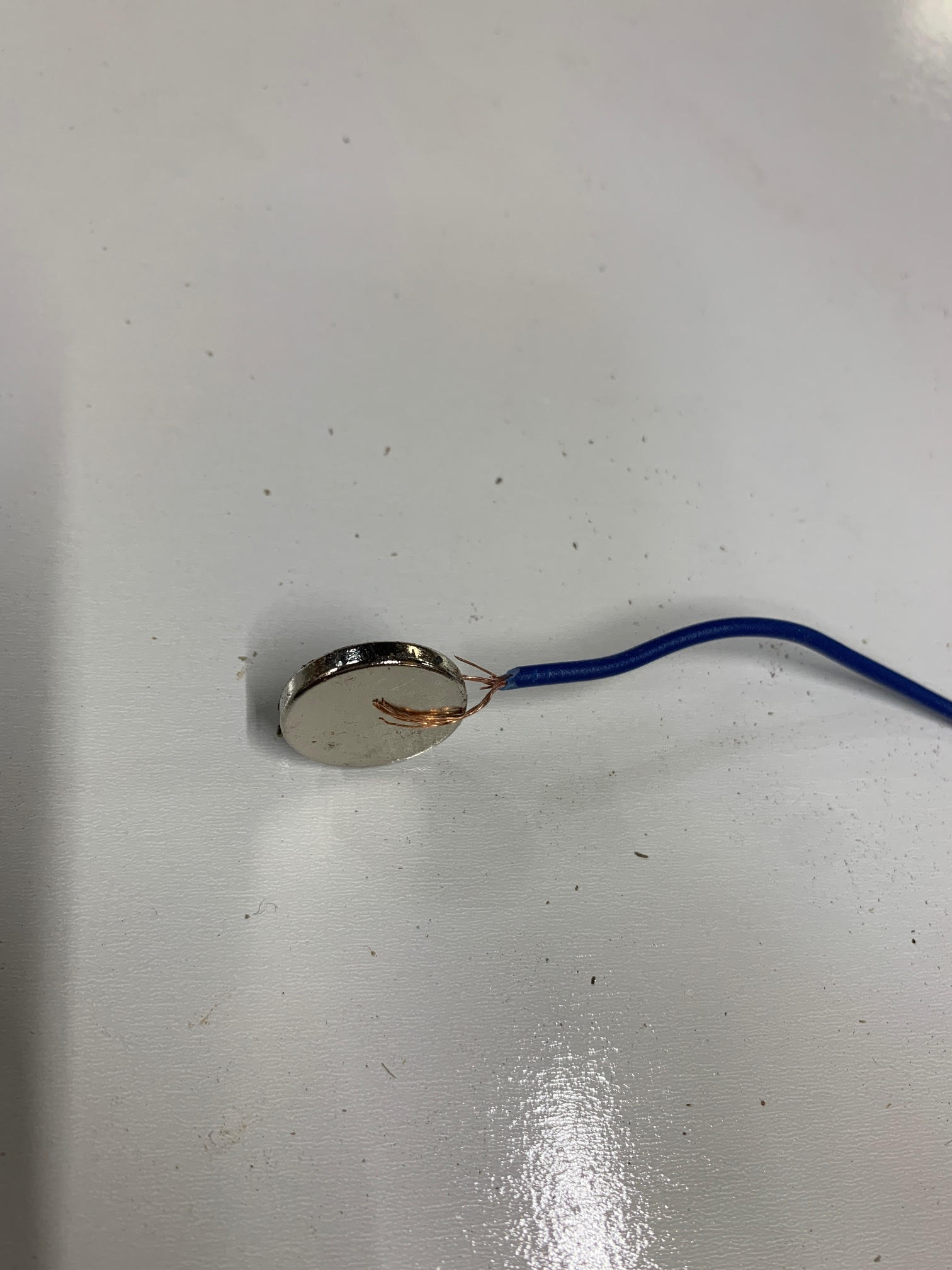
Magnet as base
The most recent experiment was to see if a strong magnetic field would influence how the tree would grow.
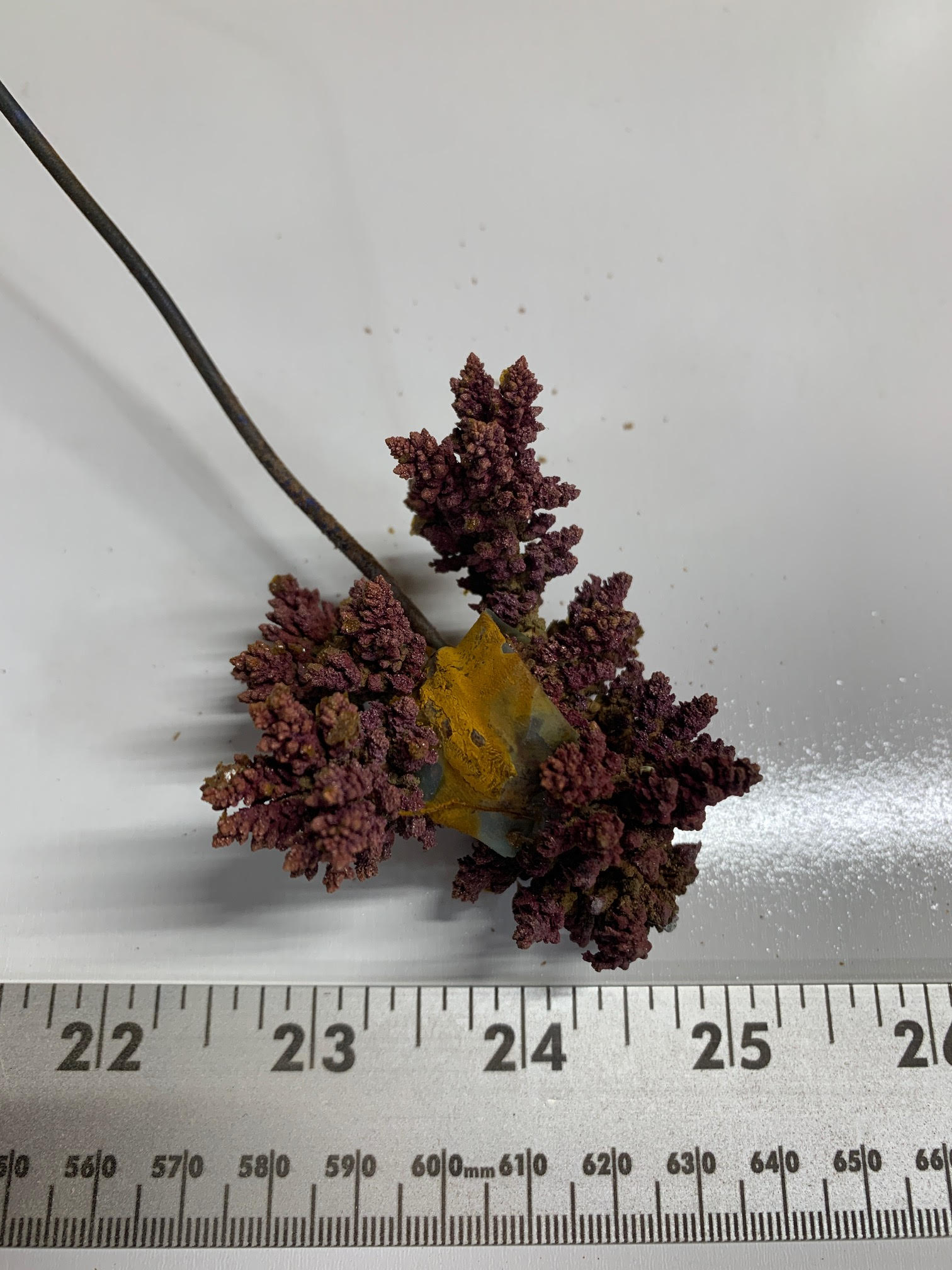
3 months later
The yellowed tape in the picture is to keep the magnet edges from being the primary growth. I was trying to get the magnet to grow along the magnetic flux lines.
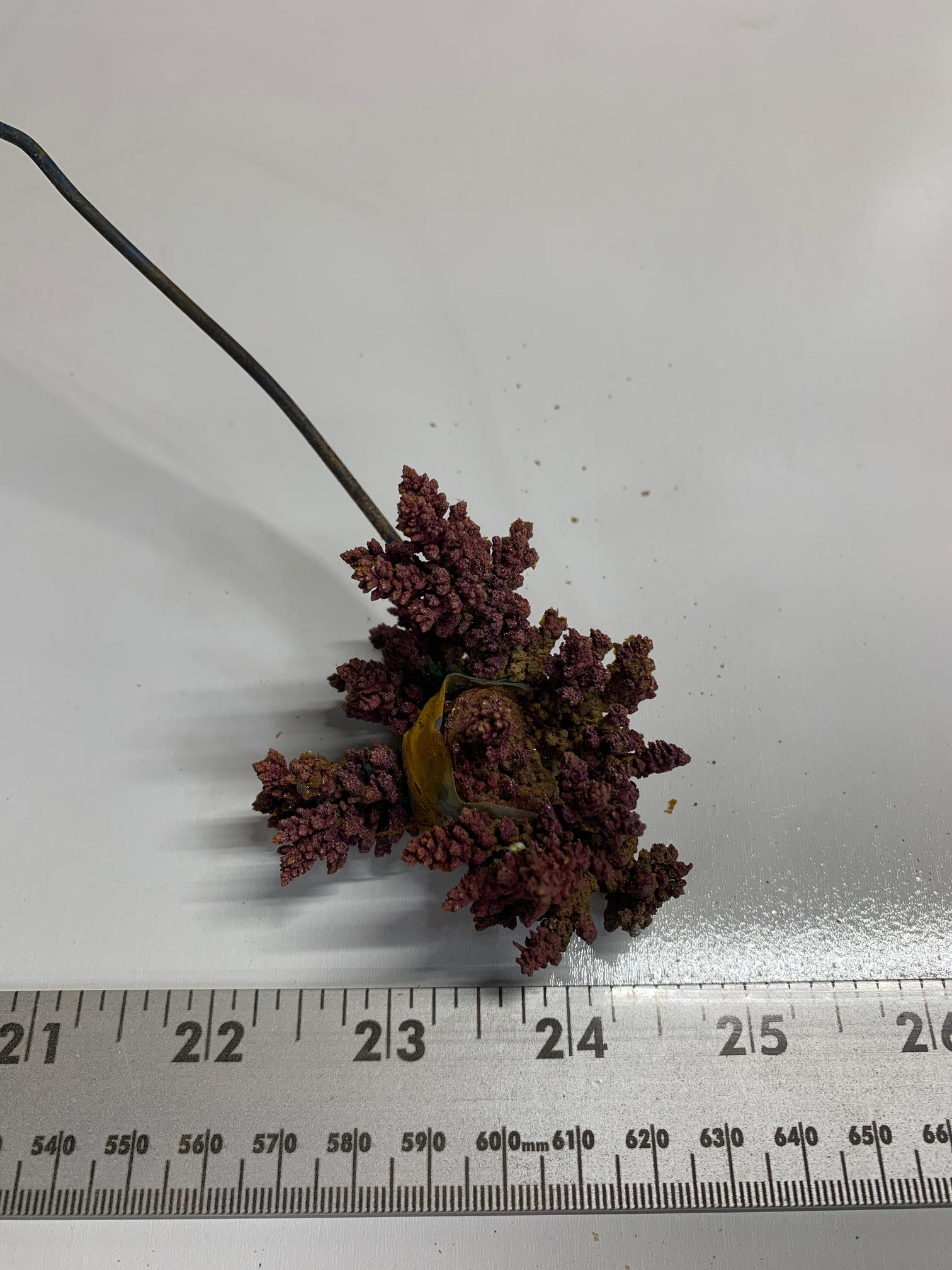
Another angle
It is hard to see, but the copper grew along any angle except the magnetic flux lines.
Copper is unusual among transition metals because of its electron configuration. In its neutral state, copper has one valence electron in the outermost 4s orbital. Instead of what you would expect as a configuration of [Ar] 3d⁹ 4s², it actually becomes [Ar] 3d¹⁰ 4s¹. This means copper has a completely filled and stable 3d subshell (!), making it an exception to the Aufbau principle.
When copper forms bonds, it often loses the single 4s electron to produce the +1 oxidation state (Cu⁺). In some cases, it can also lose an additional electron from the 3d subshell, forming Cu²⁺. (copper sulfate)
So in this experiment tested copper’s response to magnetic flux lines. Surprisingly, the copper sample avoided the flux lines instead of showing the behavior I kind of expected. Since copper’s filled 3d subshell means most electronic spins cancel out, I can be forgiven for thinking that the magnetic field would not matter much. But the observed avoidance suggests a more complex interaction. Some thinking and a coffee reveals the answer:
Even though copper seems to have one valence electron that might suggest magnetic activity, the filled 3d subshell dominates. The spin pairing cancels out, and the single 4s electron is delocalized in the metallic lattice. The net result is weak repulsion from the magnetic field rather than attraction. Ta-da! That explains it.
Next step, build an experiment to see if I can separate spin-polarized electrons using these tools. Gonna need some more coffee to think about this.
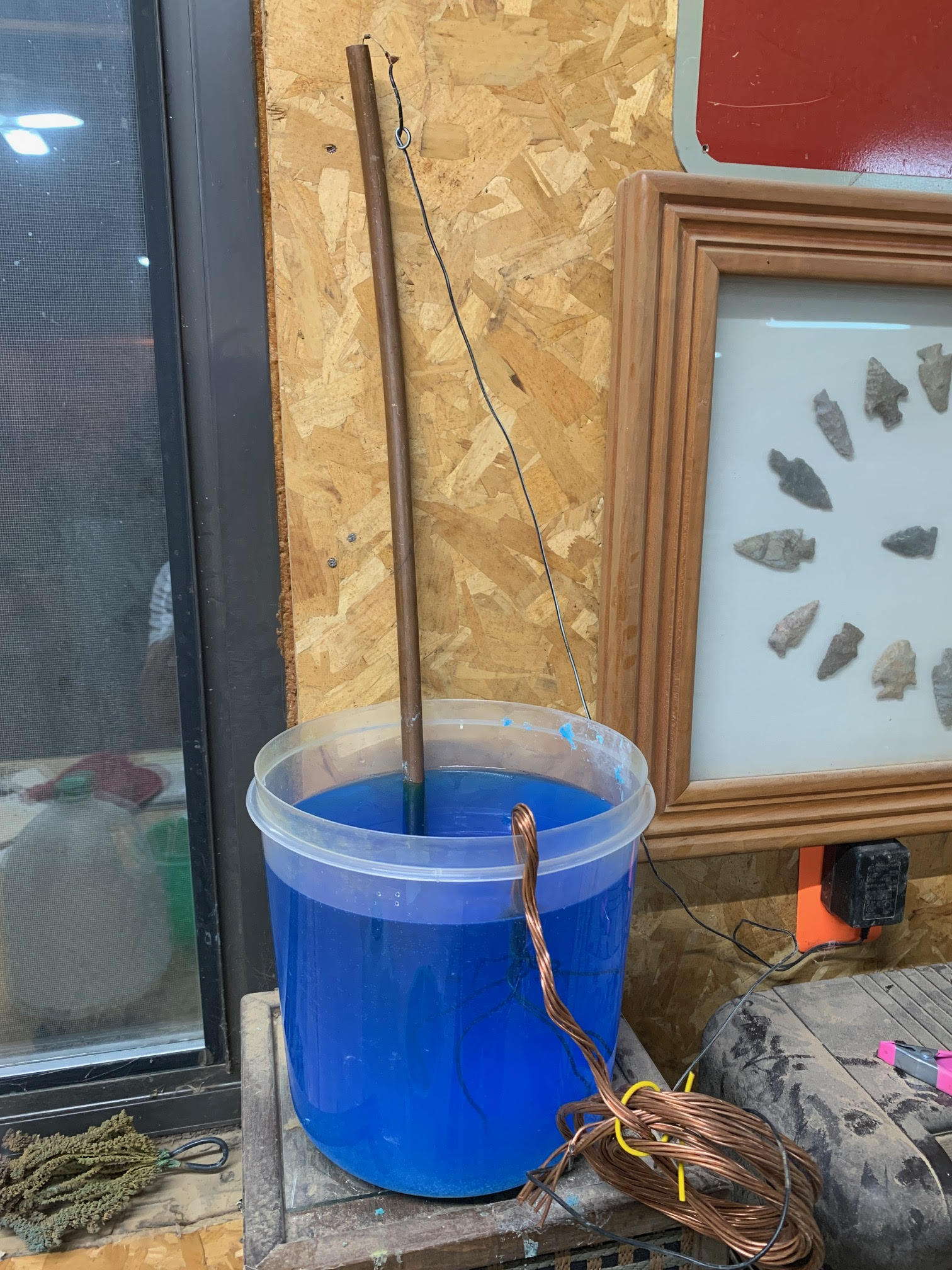
What is running now?
Another long grow experiment, plain copper, but I put a 220ohm resistor between the pipe and the positive cable, let's see if it makes the crystals grow bigger.